Introduction
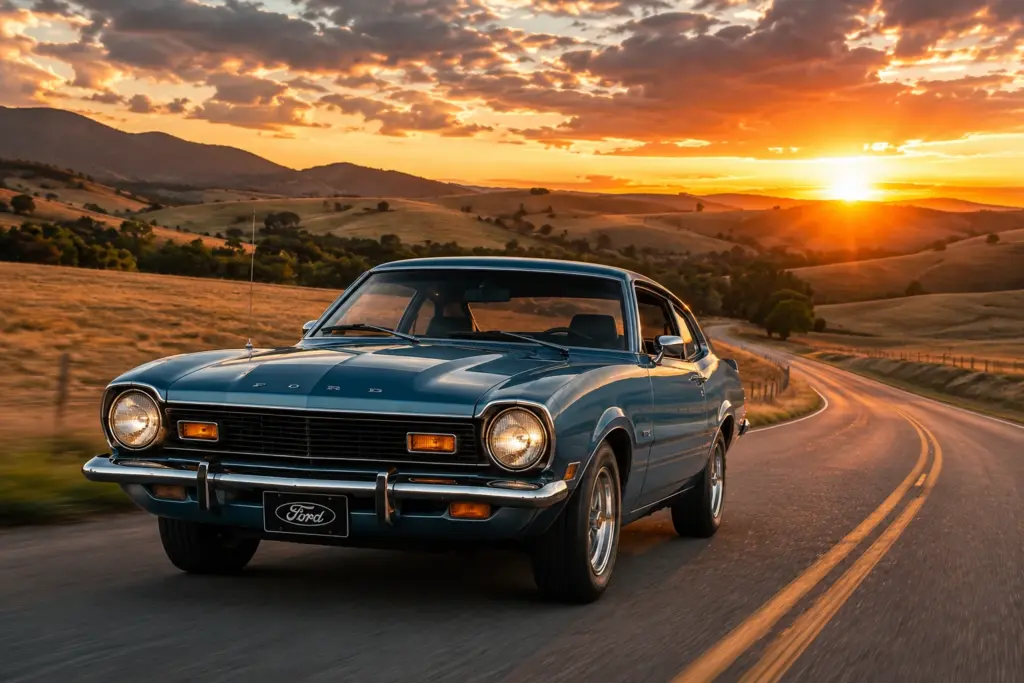
Mention classic American cars, and most people immediately think of the Mustang, Torino, or Thunderbird. Yet tucked quietly into Ford’s lineup was a compact car that sold more than 2.1 million units and became one of the company’s biggest success stories of the 1970s, the Ford Maverick. Introduced in April 1969 as a 1970 model, the Maverick was Ford’s answer to the growing popularity of economical imported cars while still delivering unmistakable American styling.
Today, the Maverick has earned a loyal following among collectors, restorers, and enthusiasts. Whether you’re researching a 71 Ford Maverick, restoring a Grabber, or simply curious about its history, this guide covers everything you need to know.
Why Ford Created the Maverick
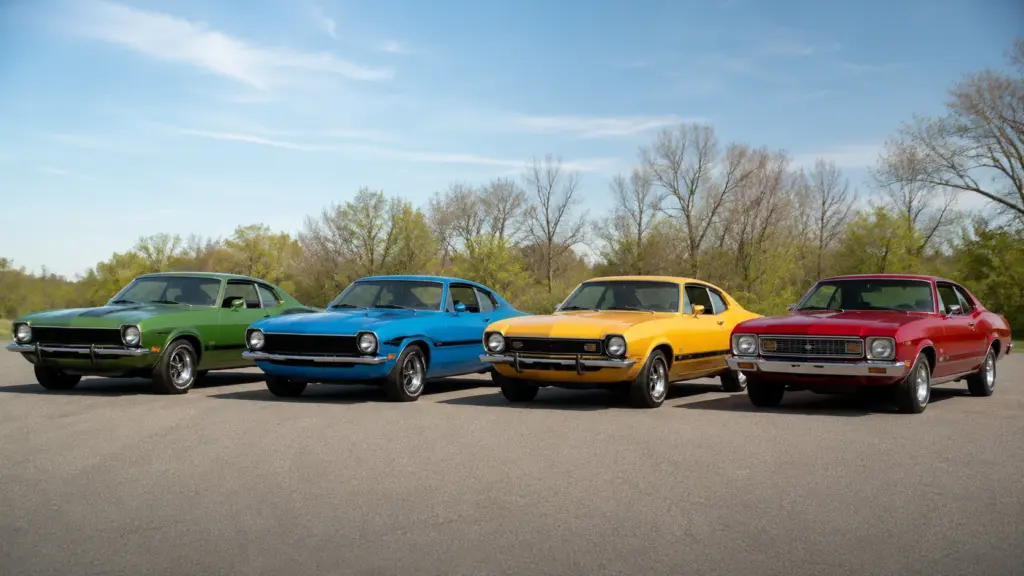
By the late 1960s, American buyers were beginning to look for smaller, more fuel-efficient cars. Japanese manufacturers such as Toyota and Datsun were steadily gaining market share, while Volkswagen continued to dominate the compact segment.
Ford needed a car that was:
- Affordable
- Simple to maintain
- Stylish enough to attract younger buyers
- Cheaper than the Mustang
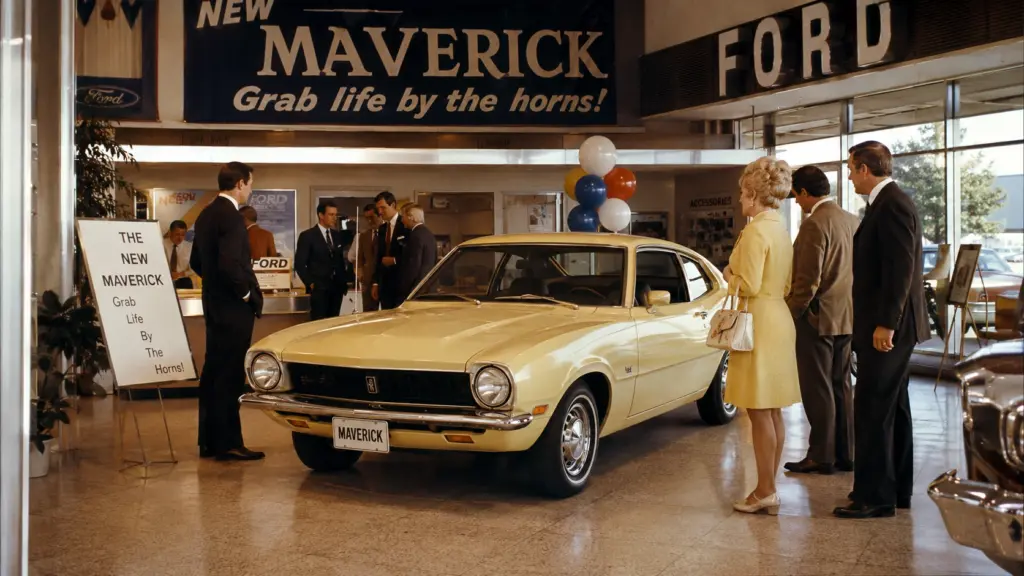
The result was the Ford Maverick.
Introduced on April 17, 1969, it carried a starting price of just $1,995, making it one of Ford’s most affordable new cars at the time. Rather than designing an entirely new platform, Ford used proven Falcon engineering underneath a fresh body featuring a long hood, short rear deck, and sporty fastback-inspired roofline.
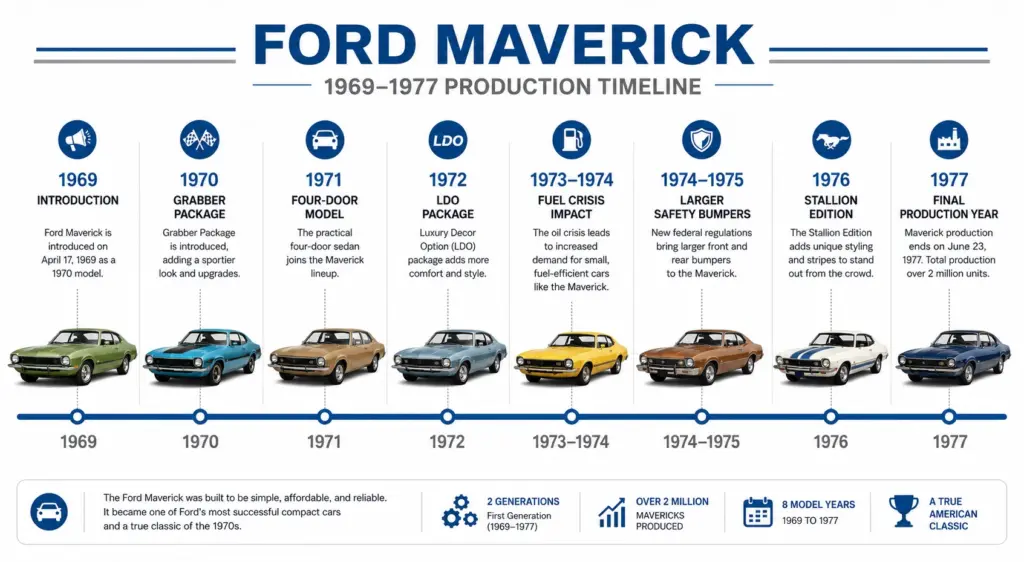
Ford Maverick Timeline (1969–1977)
1970 Ford Maverick: The Beginning
The original Maverick was intentionally uncomplicated.
Standard Features
- Two-door sedan
- Rear-wheel drive
- 170 cubic-inch inline-six
- Three-speed manual transmission
- Compact 103-inch wheelbase
Although it wasn’t designed as a muscle car, buyers appreciated its clean styling and affordable price.
Production nearly reached 579,000 units during its first year, an extraordinary achievement that nearly matched the Mustang’s famous launch year.
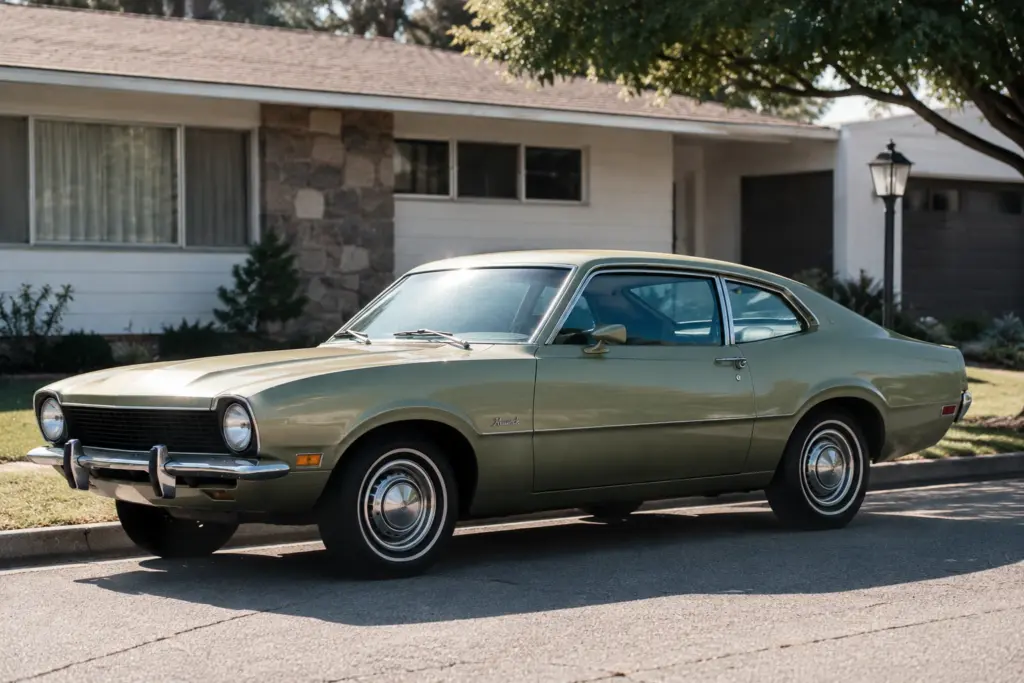
The 71 Ford Maverick: The Sweet Spot
For many enthusiasts, the 71 Ford Maverick represents the best balance of classic styling, performance, and practicality.
Several important improvements arrived for 1971.
What’s New?
- Four-door sedan introduced
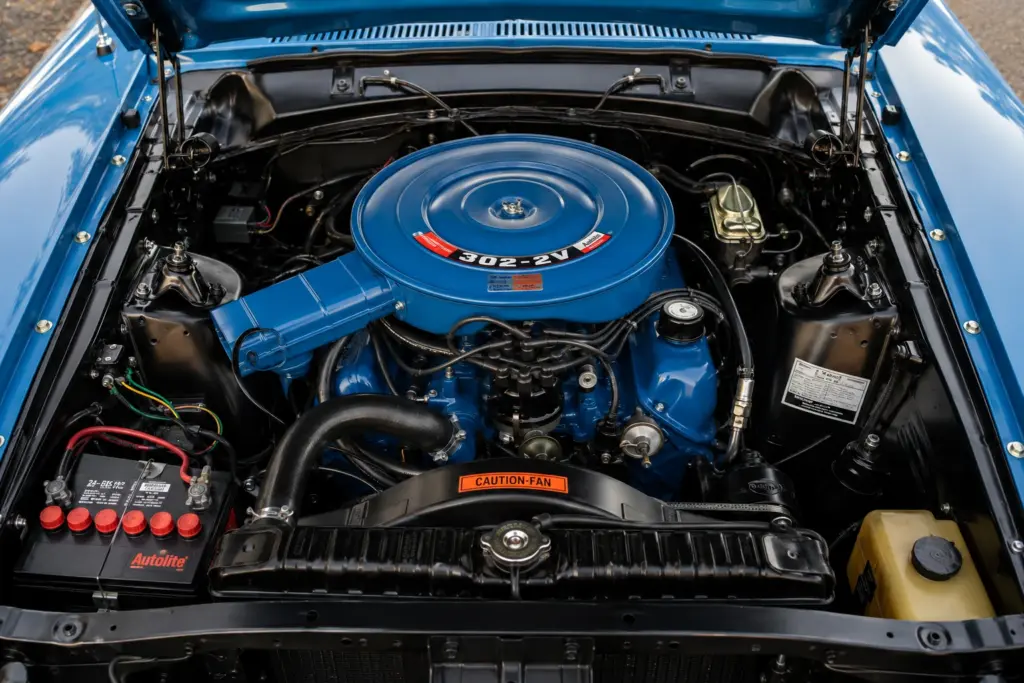
- Optional 302 Windsor V8
- Mercury Comet twin model launched
- Additional comfort and convenience options
The availability of the V8 transformed the Maverick from an economical commuter into a surprisingly entertaining compact.
Many collectors today specifically search for:
- 71 Ford Maverick Grabber
- 71 Ford Maverick 302
- 71 Ford Maverick V8
- 71 Ford Maverick restoration projects
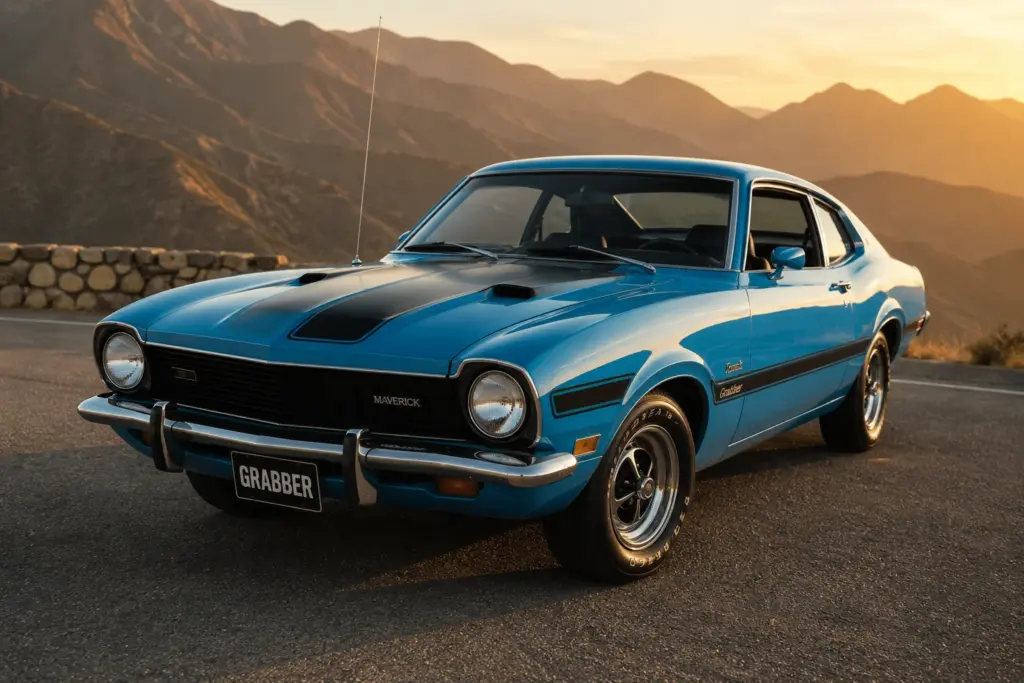
Because the 1971 models still retained the slimmer chrome bumpers and cleaner body lines of the early cars, they are widely regarded as some of the most attractive Mavericks ever built.
Ford Maverick Engine Options
Throughout production, Ford offered several dependable engines.
| Engine | Cylinders | Best For |
|---|---|---|
| 170 I6 | Inline-6 | Economy driving |
| 200 I6 | Inline-6 | Better everyday performance |
| 250 I6 | Inline-6 | Stronger torque |
| 302 Windsor V8 | V8 | Performance and modifications |
The 302 Windsor V8 remains the most desirable engine today because:
- Excellent aftermarket support
- Easy maintenance
- Strong performance potential
- Large supply of replacement parts
The Grabber Package
If there’s one version that defines the Maverick, it’s the Grabber.
Introduced during the early years of production, the Grabber package gave the compact Ford genuine muscle-car character.
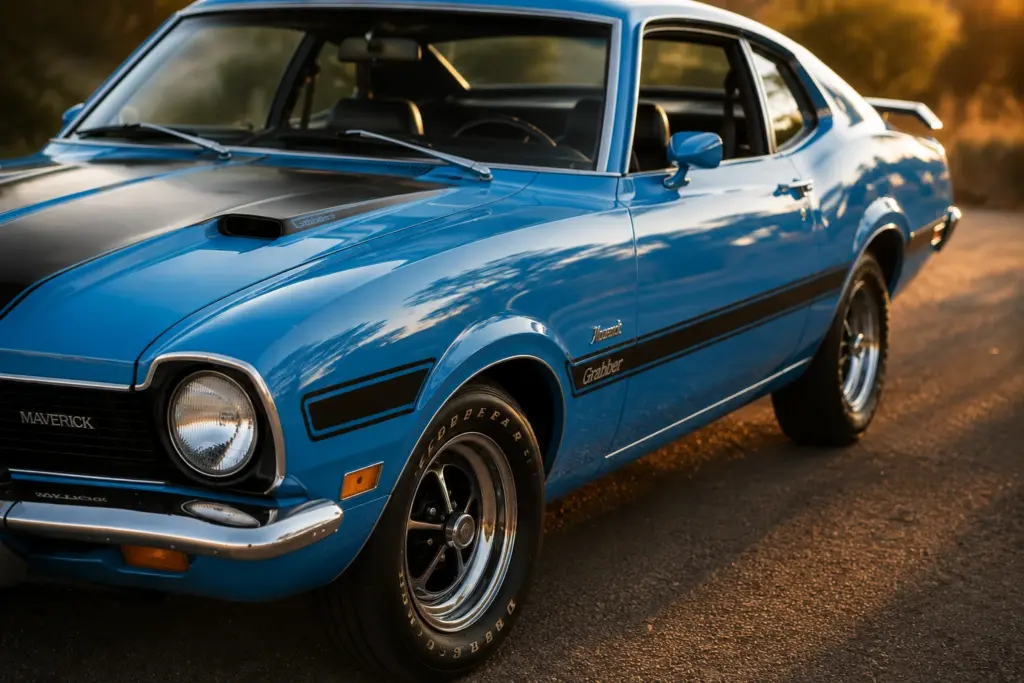
Typical Grabber features included:
- Bold exterior graphics
- Sport wheels
- Rear spoiler
- Performance-oriented suspension
- Hood styling enhancements on many models
When equipped with the 302 V8, the Grabber became one of Ford’s most enjoyable compact performance cars of the era.
Luxury Arrives: The LDO
Not every buyer wanted a sporty Maverick.
In 1972, Ford introduced the Luxury Decor Option (LDO).
Features included:
- Vinyl roof
- Improved interior trim
- Higher-quality upholstery
- Additional chrome accents
The LDO appealed to buyers who wanted compact dimensions with a more upscale feel.
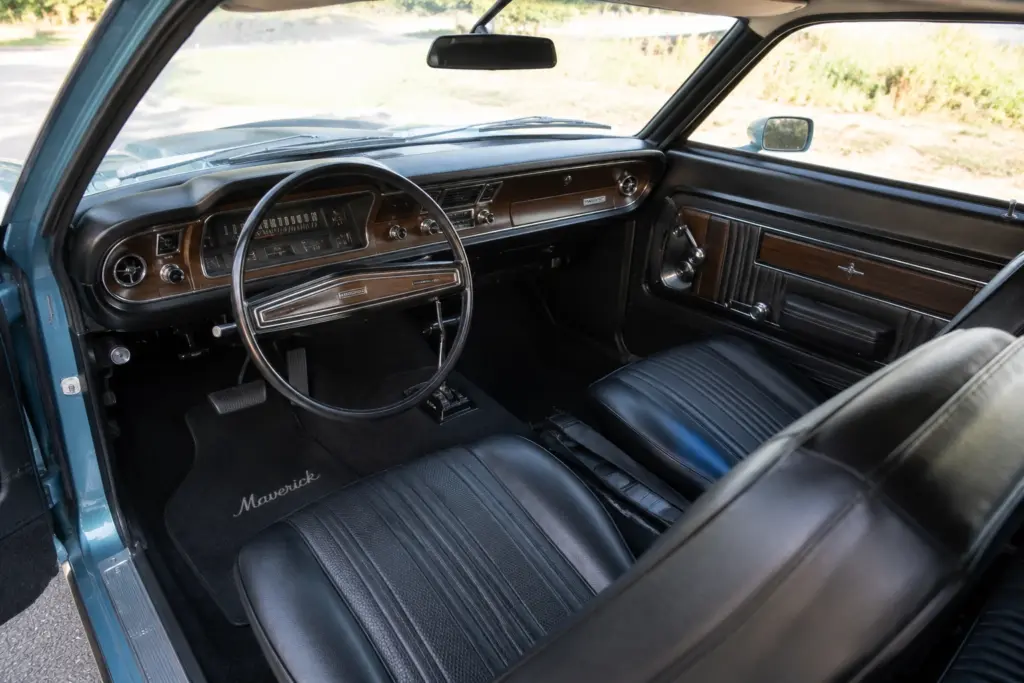
The 1973 Oil Crisis Changed Everything
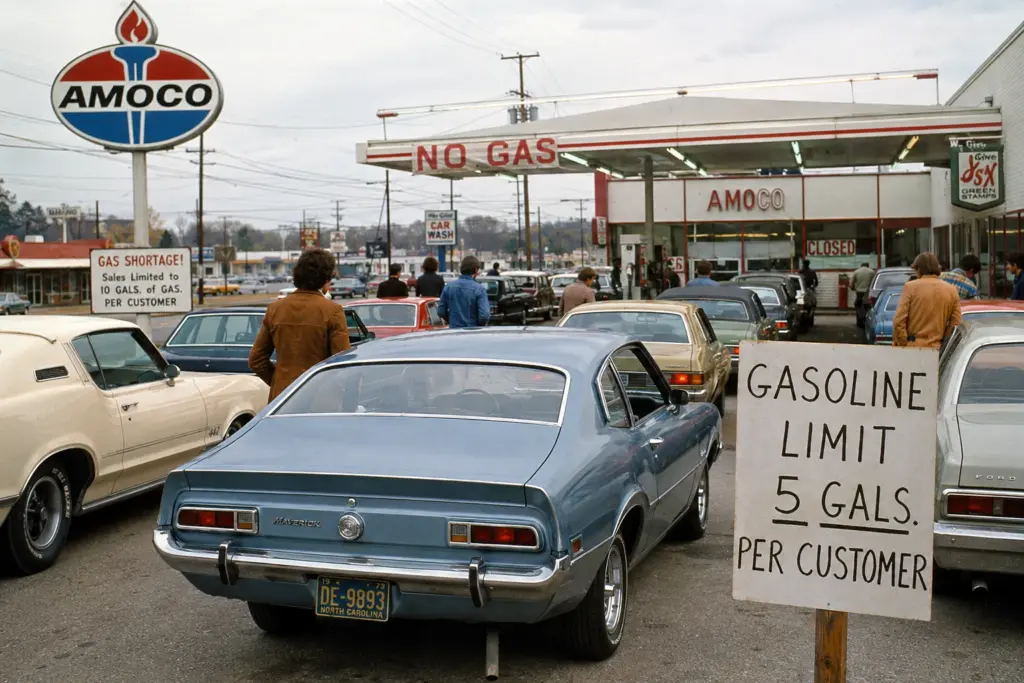
The 1973 oil crisis dramatically shifted American buying habits.
Large V8-powered cars suddenly became expensive to operate, while smaller vehicles surged in popularity.
The Maverick was perfectly positioned.
Its combination of:
- affordable pricing,
- reliable inline-six engines,
- straightforward mechanics,
made it one of Ford’s strongest sellers during the mid-1970s.
Safety Regulations Changed the Design
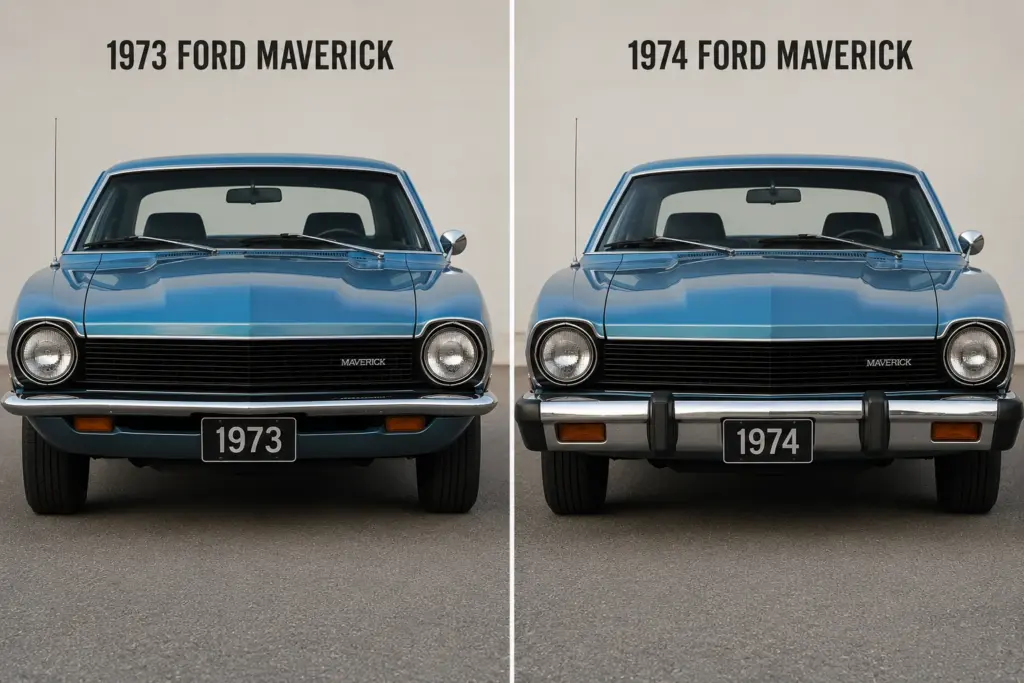
Beginning in 1974, new federal crash standards required larger impact bumpers.
As a result:
- Front bumpers became much larger
- Rear bumpers followed
- Overall vehicle length increased
- Early cars retained a cleaner appearance
This explains why many collectors prefer the 1970–1973 models over later versions.
1976 Stallion Edition
Ford attempted to inject fresh excitement into the Maverick with the Stallion Package.
It featured:
- Black exterior trim
- Sport wheels
- Unique graphics
- Aggressive appearance package
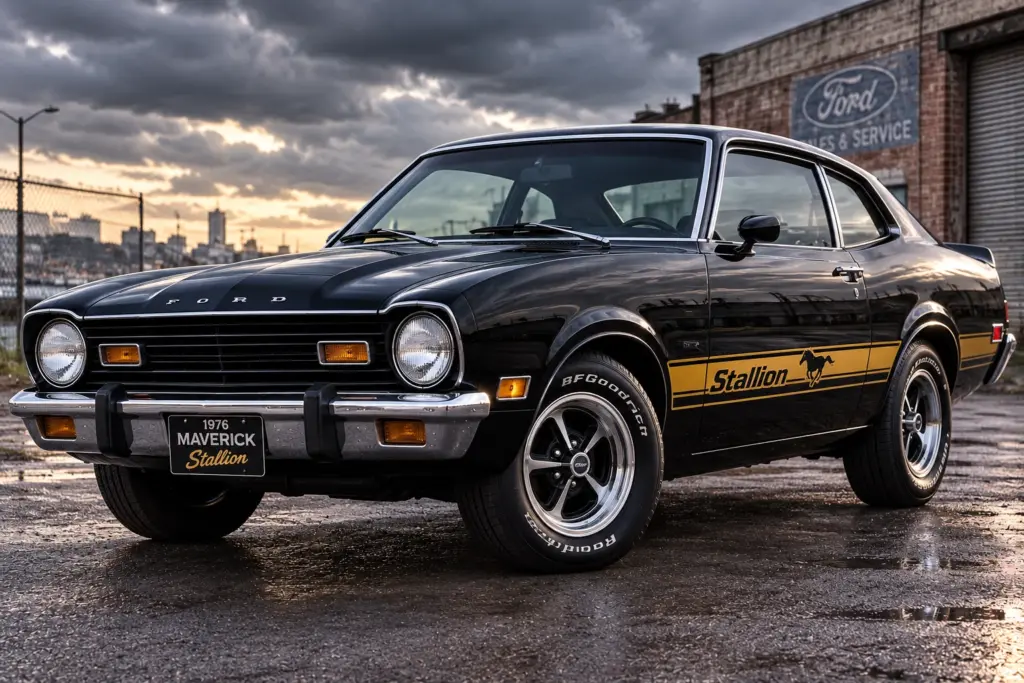
While not produced in huge numbers, Stallions have become increasingly collectible.
End of Production
By 1977, the Maverick had reached the end of its development.
Ford introduced the new Fairmont for 1978, replacing the aging Maverick platform with a more modern Fox-body design.
Even so, the Maverick left an impressive legacy:
- More than 2.1 million North American vehicles produced
- One of Ford’s best-selling compact cars
- Strong enthusiast following today
Why the 71 Ford Maverick Remains So Popular
Among all production years, the 71 Ford Maverick consistently ranks among enthusiasts’ favorites.
Reasons include:
- Classic chrome bumpers
- Clean early body styling
- Availability of the 302 V8
- Grabber package options
- Easier restoration compared with some later models
- Excellent aftermarket parts availability
It’s a car that feels equally at home cruising to a weekend car show or serving as the foundation for a period-correct street machine.
Buying a Classic Ford Maverick Today
If you’re shopping for a Maverick, inspect these areas carefully.
Rust Hotspots
- Front fenders
- Rear quarter panels
- Floor pans
- Trunk floor
- Rocker panels
- Shock towers
Mechanical Checks
- Steering play
- Suspension bushings
- Brake system
- Cooling system
- Differential leaks
- Transmission operation
Parts Availability
Fortunately, many mechanical components remain readily available because they were shared with other Ford vehicles of the era. Body panels and trim pieces, however, can be more difficult to source, especially Grabber-specific items.
Ford Maverick vs Ford Falcon
| Feature | Ford Falcon | Ford Maverick |
|---|---|---|
| Production | 1960–1970 | 1970–1977 |
| Styling | Conservative | Sporty fastback-inspired |
| Target Buyer | Family compact | Young buyers and import shoppers |
| Performance Options | Limited | Grabber, 302 V8 |
| Collector Appeal | High | Rapidly increasing |
Final Thoughts
The Ford Maverick may have started life as an affordable compact designed to compete with imported cars, but it became much more than that. Its blend of simple engineering, timeless styling, and surprising versatility has earned it a well-deserved place in American automotive history.
For many enthusiasts, the 71 Ford Maverick stands out as the sweet spot of the entire production run. It captures everything people love about early 1970s Fords: clean styling, dependable mechanics, and the option of V8 power in a lightweight package. Whether you’re restoring a Grabber, searching for your first project, or simply learning about this underrated classic, the Maverick offers an approachable entry into the world of vintage American cars.
More than fifty years after its debut, the Ford Maverick continues to prove that great classics aren’t defined solely by horsepower or price, they’re remembered for the stories they create, the communities they inspire, and the smiles they bring every time they hit the road.